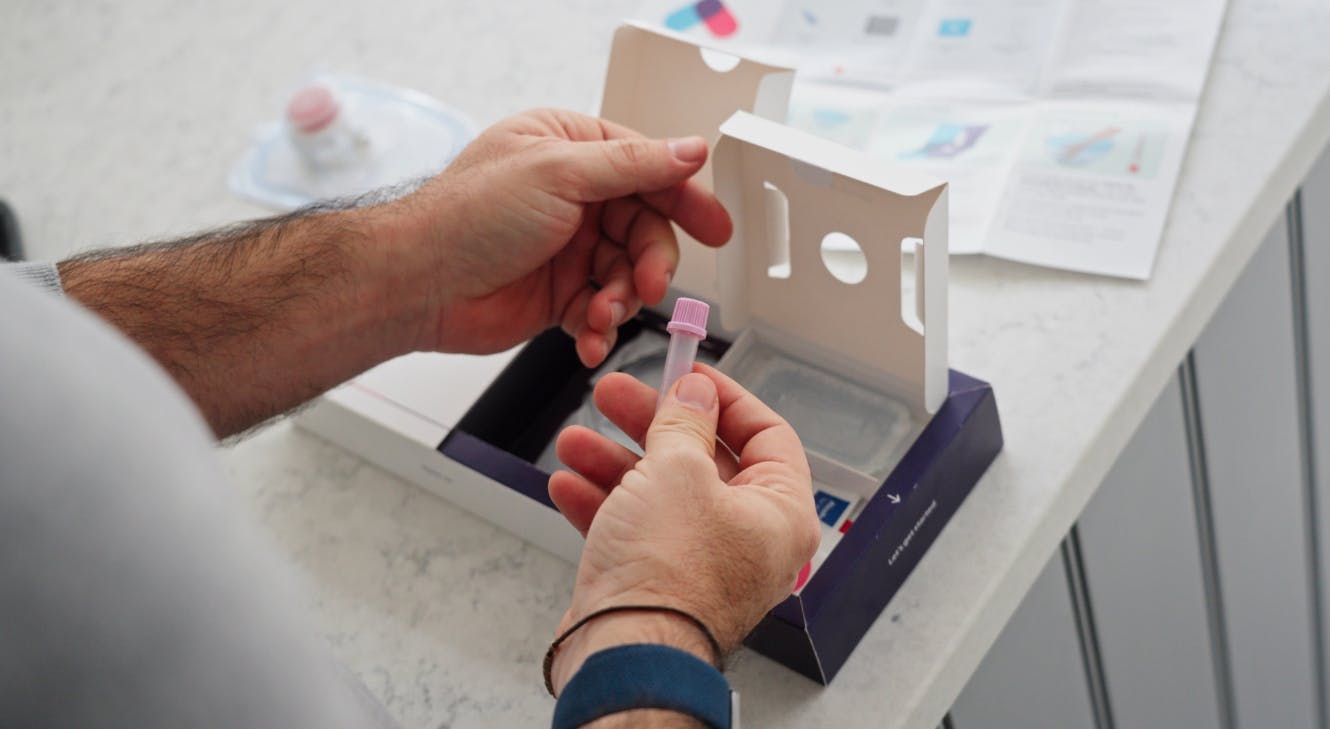
How we make sure your home blood test results are accurate & reliable
What's covered?
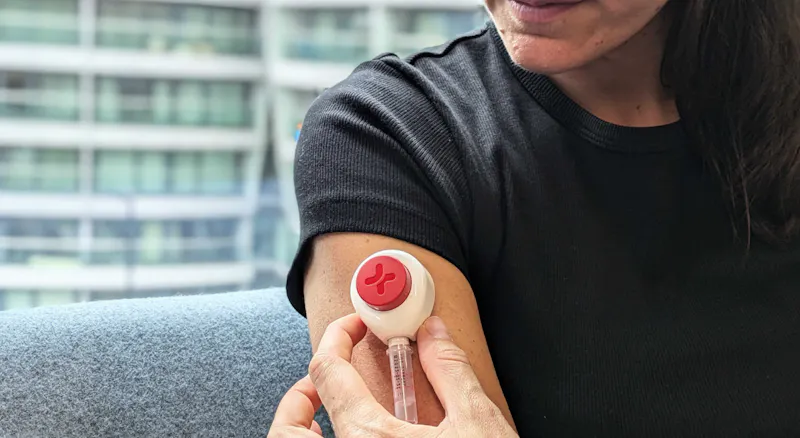


Our home blood tests are clinically validated to produce results equivalent to a venous blood draw at your GP. The difference is in how the sample is collected, not in the accuracy of the result.
If you’ve had a blood test at a hospital or GP surgery, it’s likely been using a needle in your arm. Thriva’s home blood tests produce the same level of accuracy in results, but they work slightly differently.
A 2025 study showed that some UK home blood tests lack accurate evidence to prove that they were reliable. We think it's important that you know that you can trust our tests, which is why we're sharing how we validate our tests.
This article explores our clinical validation process to show you how we ensure our tests are just as reliable as those you’d get from your GP.
How does a home blood test work?
Our kits include your choice of Autodraw device or fingerprick lancet. These collect a smaller amount of blood from your capillaries, which are small blood vessels.
While the home kit requires a smaller amount of blood than you might be used to, it’s enough to get accurate results.
We don’t offer a test until we’ve proven that it works. That means we run validation studies demonstrating that a home-collected sample produces the same results as a venous blood draw, and that those results remain stable during processing in the post.
How we validate our home blood test reference ranges
Reference ranges are the classifications you’ll see on your results, such as abnormal, normal, and optimal. However, these aren’t universal terms. They’re set by individual laboratories based on their specific equipment, methods, and local population data.
Some biomarker ranges are standardised nationally. For example, HbA1c (a marker of your blood sugar levels over time) is consistent across UK labs.
Other markers aren’t standardised. Women’s hormones have variable reference ranges, due to both operational differences and research gaps.
Good reference ranges matter because they tell you whether a biomarker is normal, too high, or too low. We only work with lab partners who have large, reliable datasets and are continually building them.
This means we trust the results they produce, and you can trust the interpretation you see in your doctor’s report.
How we validate capillary blood tests against venous samples
Before we roll out a new test, we research it extensively. We’re looking for two things: interchangeability and stability.
A test that’s interchangeable is one where capillary blood (which is collected at home) produces results that are clinically equivalent to venous blood drawn from your arm. Because venous tests are considered the clinical gold standard, our capillary tests need to match this standard.
Stability is also crucial to valid results. A sample collected at home can take 2-3 days to reach the lab, so we need to make sure the results are just as accurate as when the sample is fresh. We research how long samples can wait while still producing accurate results to make sure all our tests are valid.
We know that things don’t always go to plan, and sometimes a sample sits in the post for a little bit longer than expected. Our validation testing accounts for this, so you can feel confident that the results you receive are accurate.
How we choose UKAS-accredited laboratories
When we choose a lab to partner with, we make sure they’re accredited. This means they have to meet certain standards of quality management and technical competence.
But accreditation doesn’t tell you everything. External Quality Assessment (EQA) schemes are independent, external programmes that send identical samples to multiple labs. The results reveal whether a lab produces consistent results, and how it stacks up against its peers.
While EQA schemes are optional, we think it’s necessary in order to meet our standards, so we only work with labs that participate in EQA.
When we validate a new test on capillary samples, we apply for UKAS accreditation. This means that the test and lab meet standards for quality, reliability, and competence.
Why this matters for your results
When you look at your Thriva results, you're seeing the results of a test that’s been validated to match the clinical standards for venous blood testing.
Every test we offer has been proven to produce interchangeable results from a capillary sample. Every sample has been tested for stability under real postal conditions. Every lab we work with is accredited and externally benchmarked against its peers.
This means you can trust that your results match what’s actually going on in your blood. You can feel assured that the guidance you’ve received in your doctor’s report is based on an accurate test, and you can know that you’re tracking real progress in future tests.
Deeks, J. (2025). Direct-to-consumer self-tests sold in the UK in 2023: cross sectional review of regulation and evidence of performance. https://www.bmj.com/content/390/bmj-2025-085547
UK NEQAS. (2024). What is External Quality Assurance and Why is it Important? https://www.immqas.org.uk/news/what-is-external-quality-assurance-and-why-is-it-important/
UKAS. (n.d.). Laboratory accreditation. https://www.ukas.com/accreditation/standards/laboratory-accreditation/