The health benefits of spending time in nature and how much you really need
What's covered?
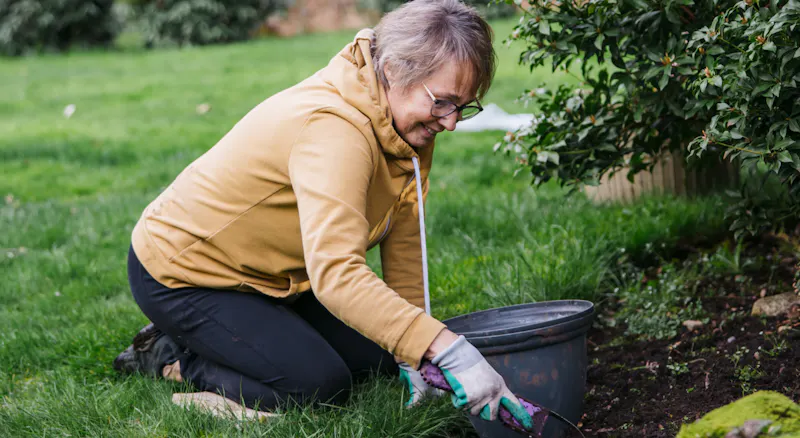


Has spring finally sprung? With the days getting longer, there are more possibilities for getting outside — and even a few minutes of fresh air might be more beneficial than you think.
It’s well-established that being outside is good for our health. But what is less certain is just how much time outdoors is enough for us to start feeling the benefits.
If you’re thinking it’s only hour-long hikes in forests that make a difference, a 2025 study suggests otherwise: being outside for as little as 10 minutes, in green spaces within built-up areas, can help improve mental health.
Read on to find out what data the researchers assessed, why being outside might be good for your health, and what simple activities on your doorstep could make a difference.
How much time in nature improves mental health?
For the 2025 meta-analysis, published in Behavioral Sciences, researchers analysed data from 78 studies to see what impact the length and number of times people visit nature have on mental illness.
The studies included in the meta-analysis either looked at adults with a mental health condition diagnosis, such as depression or binge-eating disorder, or adults who experienced mental illness symptoms.
Natural settings included green spaces in built-up areas as well as wilder places like forests and mountains.
For people with a mental health diagnosis, the researchers found that the longer people spent in nature, the greater the positive effect they experienced, up to a certain amount of time. This was a statistically significant relationship that was present for both one-off visits to nature and multiple trips.
Even 10-minute visits to a green space had a positive impact on participants’ mental health.
For people experiencing mental health symptoms, the researchers only noted a significant positive effect of spending time in nature when participants went on repeat occasions, with more time in nature leading to more positive effects. A one-off visit, no matter how long, did not have a significant impact.
The authors wrote that these findings suggest people with mental health symptoms may be able to experience some immediate relief from symptoms just by stepping outdoors in places like urban parks if they do it regularly.
Why is time in nature good for your health?
There are two major theories on why time spent in nature might benefit our mental health: the attention-restoration theory and the stress-reduction theory.
Attention-restoration theory
The attention-restoration theory posits that our modern technology-dominated lifestyles demand a lot of attention from us, leading to mental fatigue. Time in nature gives our bodies and minds an opportunity to recover from these demands.
Stress-reduction theory
The stress-reduction theory suggests that instead of restoring our capacity to pay attention, time in nature helps to counter physiological changes to our body due to external stressors. It affects our cardiovascular, musculoskeletal, and nervous systems in ways that can support a more positive emotional state.
One small study with 36 participants supports this latter theory. Here, spending time outdoors at least three times a week was associated with lower levels of stress biomarkers (cortisol and alpha-amylase) in participants’ saliva.
Physical health benefits of time in nature
When it comes to physical health, scientists are exploring several other aspects of your health that could benefit from more time outside:
- Cardiovascular disease risk: Access to green spaces is associated with a lower risk of cardiovascular disease (CVD). This may be due to less exposure to pollutants, mental health improvements, exercise, and a lower likelihood of CVD risk factors like high blood pressure.
- Gut health: Exposure to different plants outdoors, including in your garden, could impact the makeup of your gut microbiome, the community of microbes living in your gut connected to digestive health, your immune system, and mental health.
- Strong muscles and bones: Vitamin D is vital for bone and muscle health. Some studies also associate not getting enough of it with a variety of issues, from high blood pressure to multiple sclerosis. The evidence for links outside of bone-related issues is quite weak at present, however.
Limitations of the research on nature and health
An issue with some research into the impact of nature on health is that few studies take into account what people do outdoors. As a result, there’s a risk that reported benefits may be down to physical activity rather than the environment.
One 2021 meta-analysis found benefits to mental health only with specific outdoor activities: gardening, exercise, and nature-based therapy.
However, there are other studies, such as a 2025 meta-analysis, that suggest even viewing natural environments from a window could provide health benefits.
The 2025 meta-analysis we’re looking at specifically follows clinical populations rather than the general public. This limitation is common to many studies looking at mental health.
We do have some other studies in non-clinical populations to look at, though, such as a 2016 study that assessed 1,538 people from Brisbane in Australia. Here, the authors found an association between visiting urban green spaces and lower rates of depression and high blood pressure.
Finally, the 2025 meta-analysis is also unable to show us what the long-term impact of time in nature might be, or if different demographics might experience things differently.
How to get the most from time in nature
While there are some limitations to research into how green spaces can influence your health, stepping outside remains a relatively accessible health intervention.
The big takeaways from the 2025 meta-analysis are that even 10 minutes in nature could have an impact, and visiting green spaces in towns and cities can fit the bill just as much as exploring the wilderness.
Finding time for a lunchtime stroll, a dog walk, or a spot of gardening when you have a spare moment could provide a boost for both your mind and body.
Getting out of your house won’t just stretch your legs; you could also be helping your mind and body to recover from stressors and draining demands on your attention.
You could also try moving some indoor activities, such as reading, eating, or even working if possible, to a local park or back garden.
Getting outside more often also supports your vitamin D levels, which is particularly important in the UK, where levels tend to dip over the winter months. If you’re curious where yours currently stand, a Thriva blood test can check your vitamin D from home.
And if you’re unable to get to a green space — if the weather is bad or you’re not feeling well, for instance — try spending a bit of time by a window that gives a view of the world outside if you can.
Takeaway
Spending time in nature is associated with improved outcomes for mental health diagnoses as well as mental health symptoms. A 2025 meta-analysis noted significant positive effects associated with even 10-minute trips to green spaces, so if you’re only able to get outside briefly, you could still be supporting your health and wellbeing.
Disclaimer: This information is for general educational purposes only and isn’t a substitute for professional medical advice, diagnosis, or treatment. Always speak with a qualified healthcare professional first if you have concerns about your health.
- Bettmann, J. et al. (2025). A systematic review and meta-analysis on the effect of nature exposure dose on adults with mental illness. https://pmc.ncbi.nlm.nih.gov/articles/PMC11851813/
- Hunter, M. et al. (2019). Urban nature experiences reduce stress in the context of daily life based on salivary biomarkers. https://pmc.ncbi.nlm.nih.gov/articles/PMC6458297/
- Keith, R. et al. (2024). Greenspaces and cardiovascular health. https://www.ahajournals.org/doi/10.1161/CIRCRESAHA.124.323583
- Meredith, G. et al. (2020). Minimum time dose in nature to positively impact the mental health of college-aged students, and how to measure it: A scoping review. https://pmc.ncbi.nlm.nih.gov/articles/PMC6970969/
- Natural England. (2025). Accredited official statistics - Adults' year 5 annual report (April 2024 - March 2025). https://www.gov.uk/government/statistics/the-people-and-nature-surveys-for-england-adults-data-y5q4-january-2025-march-2025/adults-year-5-annual-report-april-2024-march-2025
- Office of Dietary Supplements. (2022). Vitamin D. https://ods.od.nih.gov/factsheets/VitaminD-Consumer/
- Parajuli, A. et al. (2020). Yard vegetation is associated with gut microbiota composition. https://www.sciencedirect.com/science/article/pii/S0048969720302175
- Shanahan, D. et al. (2016). Health benefits from nature experiences depend on dose. https://pmc.ncbi.nlm.nih.gov/articles/PMC4917833/
- Soga, M. & Gaston, K. (2025). Health benefits of viewing nature through windows: A meta-analysis. https://academic.oup.com/bioscience/article/75/8/628/8185762