What happens to your brain when you swap scrolling for reading?
What's covered?
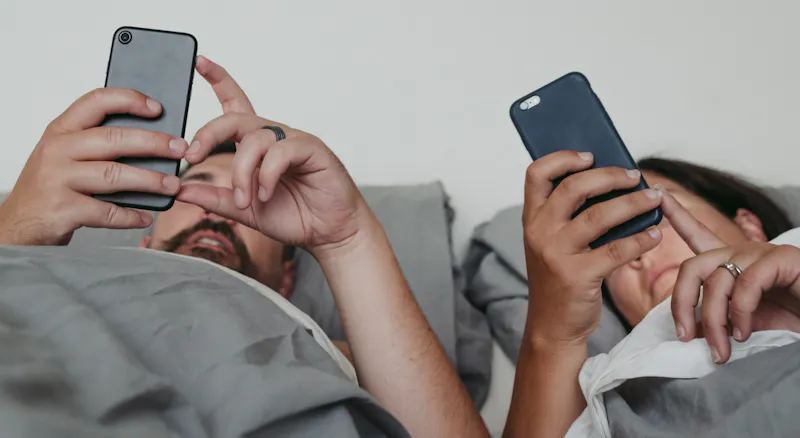


I'll just have a quick look on Instagram, you think, as you open the app and begin scrolling. In the space of what feels like a few cat videos, an hour has gone and you're wondering where the morning went.
Lots of us do it. Surveys have suggested that, on average, internet users spend 141 minutes a day scrolling through social media.
But social media use is squeezing out other pastimes. Research from The Reading Agency in 2024 found that 35% of UK adults were lapsed readers, with many attributing the loss to social media.
Is it that much worse to spend your time reading social media posts versus books? One 2024 study suggests it might depend on how much time you spend on social media, with excessive social media use associated with poorer mental health and sleep quality.
How does social media affect your mental health?
In the study, published in the Journal of Affective Disorders, researchers reviewed the results of 182 previous studies investigating the effects of social media use on mental health and sleep.
From these studies, the researchers conducted a meta-analysis using 98 of them, featuring a total of 102,683 participants.
The researchers found small associations between social media use, depression, and anxiety.
When it came to problematic social media use—defined loosely as high frequency use, passive use, or a mix of both, which some might refer to as "social media addiction"—there were more significant positive associations with depression, anxiety, and poorer wellbeing.
Problematic social media use was also associated with sleep problems, although not with any changes in sleep duration. So while people with problematic social media use were not sleeping any less, the quality of their sleep may have worsened.
The associations with depression and anxiety were stronger in younger social media users, as was the association between problematic social media use and anxiety with female users.
How does social media affect your brain?
The researchers suggest a number of potential reasons for these findings.
As the associations between social media use, depression, and anxiety weren't particularly strong, the researchers propose these could be due to social media magnifying low self-esteem, poor coping skills, or pre-existing mental health conditions.
Social media platforms are also ‘addictive.’ They’re purposefully designed to maximise the amount of time users spend on them, with the ability to continuously scroll and algorithms tailoring what content appears.
A 2025 review explored how these design features can affect the developing teenage brain, highlighting the neurophysiological impact of algorithm-driven content on attention and reward pathways.
When we experience something that feels rewarding, a hormone called dopamine is released. It's known as the "feel-good" hormone for the way it gives us a sense of pleasure.
Our brain's reward system reacts to the content we see, and a never-ending river of quick-to-digest short-form pieces may lead to a "dopamine cycle" that drives us to continue seeking stimulation.
In some ways, social media works like snack foods designed to be hyperpalatable. You just keep reaching for more. And much like those snacks can provide "empty calories", social media interactions might be providing dopamine without much social sustenance behind them.
Does social media definitely cause mental health problems?
Not necessarily. The strongest evidence in the 2024 study was linked to the people who used social media the most.
This shows that the amount of time spent on these platforms is important, but there is currently no single definition for problematic use.
The researchers also noted different effects for younger users and female users, as well as geographical differences. For example, the studies from North America found stronger associations than those from Europe and Asia.
This suggests that the impact of social media use will vary from person to person, and your own individual circumstances will determine what kind of effect it might have.
The study also leaves a lot of scope for uncertainty elsewhere. It doesn't show us whether social media causes mental health or sleep problems, or if it is these that drive people towards using social media.
We also don't know how effects might vary between different social media platforms. Instagram and Facebook are quite different from X/Twitter and LinkedIn, so it may not just be a matter of how much time you spend on social media, but where you spend it, too.
Could reading be better for your brain than scrolling?
Anecdotally, many people bemoan reading fewer books than they used to. And in contrast to social media’s not-so-great impact on our wellbeing, there are a number of papers suggesting that reading could actually have a positive impact.
A 2024 study looking at 2,860 questionnaires from college students found that both reading physical texts and listening to audiobooks were associated with reduced anxiety and improved sleep quality. Another similar 2022 study found that recreational reading was associated with less distress over the course of an academic year.
Reading may also impact long-term brain health. A 2020 study that followed 1,962 older adults for 14 years reported that the participants who read the most had a reduced risk of cognitive decline compared with those who read the least.
It may benefit sleep, too. A citizen science trial found that reading a book in bed before sleeping improved sleep compared with not reading in bed.
We also know that reading can have a tangible effect on the physical makeup of your brain. Studies have shown that the act of reading can support the development of connecting nerve cells in your brain when growing up as well as influencing connectivity between different brain regions.
There's also evidence that reading fiction can improve empathy and emotional intelligence. A 2024 meta-analysis of 70 experiments found that reading fiction led to small but significant cognitive benefits, with the strongest effects for empathy and mentalising, which is your brain's ability to understand what someone else might be thinking or feeling.
These studies are largely observational, based on specific populations like college students, and don't prove cause and effect. But with few reported negative impacts of reading, this suggests there's more to gain from books than just plain enjoyment.
How to read more and scroll less
It can be tricky to find time for reading, even when it's something you want to do. Much like finding time to exercise, life and busy schedules can make it seem like an impossible challenge.
Small gaps in your daily routine are great places to start looking for reading opportunities. You can try:
- On public transport: Try taking a book on your commute and reading for at least some of the journey rather than scrolling on your phone.
- When taking a break: If you're stopping work for a lunch break, reading could help you fully switch off from your tasks.
- During cooking: Cooking a meal that involves baking or boiling something? Try cracking open a book while you wait.
- On an exercise machine: Losing yourself in a book while on an exercise bike, elliptical, or treadmill might help tough sessions go by much quicker. Audiobooks are a good option here, too.
One final key time to try reading is before you sleep. The NHS recommends avoiding using electronic devices in the hour before bed, as the blue light they emit can disrupt sleep.
The 2024 study found that audiobooks had a similar benefit to physical books, so you could also try these if carrying a book around with you isn't feasible.
Remember: you don't necessarily need to worry about using social media. Just as there's always room in a healthy diet for snack foods, it's perfectly possible to live a healthy and satisfied life with a bit of scrolling here and there. It's all about balance.
Takeaway
Some research has found associations between social media use and poorer mental health and sleep, with the associations being stronger with greater use. On the flip side, several studies suggest that reading could contribute to improved sleep and greater mental wellbeing.
While there's nothing conclusive about what a healthy amount of social media use might be, it's helpful to be mindful of how you use it. Sometimes there might be better — and potentially healthier — ways to spend your time.
Disclaimer: This information is for general educational purposes only and isn’t a substitute for professional medical advice, diagnosis, or treatment. Always speak with a qualified healthcare professional first if you have concerns about your health.
- Ahmed, O. et al. (2024). Social media use, mental health and sleep: A systematic review with meta-analyses. https://doi.org/10.1016/j.jad.2024.08.193
- Chang, Y. et al. (2020). Reading activity prevents long-term decline in cognitive function in older people: Evidence from a 14-year longitudinal study. https://pmc.ncbi.nlm.nih.gov/articles/PMC8482376/
- De, D. et al. (2025). Social media algorithms and teen addiction: Neurophysiological impact and ethical considerations. https://pmc.ncbi.nlm.nih.gov/articles/PMC11804976/
- Finucane, E. et al. (2021). Does reading a book in bed make a difference to sleep in comparison to not reading a book in bed? The People's Trial—an online, pragmatic, randomised trial. https://pmc.ncbi.nlm.nih.gov/articles/PMC8740874/
- Levine, S. et al. (2022). For the love of reading: Recreational reading reduces psychological distress in college students and autonomous motivation is the key. https://pubmed.ncbi.nlm.nih.gov/32150516/
- Liu, Y. (2024). A study of the effects of four reading styles on college students' mental health and quality of life based on positive psychology-A first-of-its-kind study. https://journals.plos.org/plosone/article?id=10.1371/journal.pone.0308475
- NHS. (n.d.). How to fall asleep faster and sleep better. https://www.nhs.uk/every-mind-matters/mental-wellbeing-tips/how-to-fall-asleep-faster-and-sleep-better/
- Pınar, Y. et al. (2025). Reading and white matter development: A systematic review of neuroplastic changes in literacy. https://www.mdpi.com/2227-9067/12/6/710
- Silvani, M. et al. (2022). The influence of blue light on sleep, performance and wellbeing in young adults: A systematic review. https://pubmed.ncbi.nlm.nih.gov/36051910/
- Statista. (2025). Daily time spent on social networking by internet users worldwide from 2012 to 2025 (in minutes). https://www.statista.com/statistics/433871/daily-social-media-usage-worldwide/
- The Reading Agency. (2024). The State of the Nation's Adult Reading: 2024 Report. https://readingagency.org.uk/adult-reading-research-report-2024/
- Vaccaro, A. et al. (2021). Functional brain connectivity during narrative processing relates to transportation and story influence. https://pmc.ncbi.nlm.nih.gov/articles/PMC8287321/
- Wimmer, L. et al. (2024). Cognitive effects and correlates of reading fiction: Two preregistered multilevel meta-analyses. https://doi.org/10.1037/xge0001583