What the research reveals about getting the most out of your wearable
What's covered?
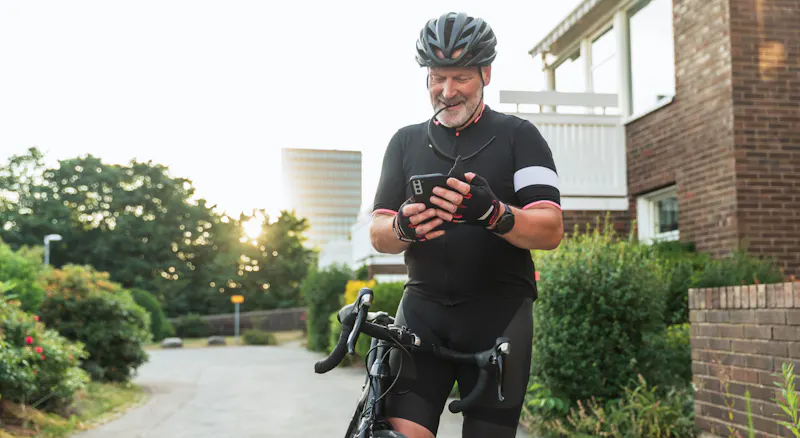


In the past week alone, your wearables have collected a small mountain of data. They can tell you the most intimate details of your heart rate variability, calories burned, and VO2 max. But are you actually getting the most out of your data?
While it’s undoubtedly fun to see our personal metrics displayed on progress charts, they’re only the starting point when it comes to actually getting healthier.
According to one recent study, wearables are particularly powerful when paired with specific goals. The findings provide valuable insight into just how impactful wearables can be.
How wearables helped make people healthier
A group of researchers based in Canada and the UK set out to determine whether wearables actually made people more likely to establish and maintain healthy habits.
The 2024 MOTIVATE-T2D trial recruited adults aged 40-75 who’d been diagnosed with type 2 diabetes in the last two years. All participants received identical exercise plans and virtual coaching, but just half were also given heart rate monitors and smartwatches. The wearable tech synced with an app that provided real-time feedback during workouts and weekly progress summaries.
And the results were striking: people using smartwatches were ten times more likely to start exercising regularly.
After 6 months, 52% of the wearable tech group hit their exercise target of 150 minutes per week. Just 17% of the no-tech group hit the target. At the end of the 12-month trial, these figures had dropped to 28% and 11%, respectively.
A drop in adherence isn’t surprising, but, notably, the wearable group remained significantly higher than their no-tech comparator.
This was a feasibility study, meaning its results don’t have the statistical power needed to prove that wearables are clinically effective. However, the findings show that wearable tech and goal setting are a powerful combination.
The broader research on wearables
The MOTIVATE-T2D trial joins a substantial body of research supporting wearables. One large systematic review found that using a wearable led to an extra 40 minutes of walking and 1,800 steps per day. It also showed modest improvements in blood pressure and cholesterol, yet these changes weren’t always meaningful.
And wearables go beyond activity tracking. They’re very good at accurately detecting heart rate—so much so that they’re increasingly used to monitor and assess cardiovascular health.
You can also use them to track sleep. While research has shown they have a tendency to overestimate sleep duration by 10% or more, they can be a useful tool when used to track over time.
Why wearable tech works
You’ve probably noticed that tracking can nudge your behaviour. Coined the Hawthorne effect, it’s well-documented that merely the awareness of being monitored can effectively change your behaviour.
Think about the feeling of adding an extra 20-minute walk to hit your step goal, choosing a healthier snack when you’re logging food in a tracking app, or dropping your threshold to a zone 2 session after noticing your heart rate creeping too high.
This may be the explanation behind why the wearable group in the study did more exercise, despite having identical training plans to the no-tech group. The real-time feedback helped their motivation and consistency, and these actions positively impacted their overall health.
How to get the most out of wearable tech
The MOTIVATE-T2D study shows that when paired with virtual coaching, specific targets, and real-time feedback, wearables are an invaluable tool.
To get the most out of tracking, try going beyond the data. Spend some time thinking about the ‘why’ behind what you’re tracking: Do you want to increase your active minutes per week? Improve your sleep quality? Reduce your LDL cholesterol? Think about what matters to you.
This is where goal setting comes in. Research tells us that specific, measurable targets (think SMART goals) are important for seeing results. They also allow us to break down larger goals into smaller steps.
For example, if your goal is to improve your cardiovascular health by reducing your triglycerides, your plan might involve increasing your exercise, changing your diet, and reducing your weight.
Your wearable then becomes the tool that tracks one piece of that puzzle. It can give you real-time data on what’s working, helping you course-correct when you need to.
Takeaway
Research shows that combining wearables with coaching and specific targets increases the likelihood of sticking to changes in real life.
We know what a powerful tool wearables can be, which is why we’ve been hard at work building a new dashboard in the Thriva app. It combines your wearable data with existing Thriva biomarkers, allowing you to track everything in one place.
Soon, you’ll be able to track and understand key metrics— like your VO2 max, resting heart rate, and sleep quality—alongside your biomarkers.
Disclaimer: This information is for general educational purposes only and isn’t a substitute for professional medical advice, diagnosis, or treatment. Always speak with a qualified healthcare professional first if you have concerns about your health.
- Bailey, R. (2017). Goal Setting and Action Planning for Health Behavior Change. https://pmc.ncbi.nlm.nih.gov/articles/PMC6796229/
- Bayoumy, K. et al. (2021). Smart wearable devices in cardiovascular care: where we are and how to move forward. https://www.nature.com/articles/s41569-021-00522-7
- Doherty, C. et al. (2024). Keeping Pace with Wearables: A Living Umbrella Review of Systematic Reviews Evaluating the Accuracy of Consumer Wearable Technologies in Health Measurement. https://link.springer.com/article/10.1007/s40279-024-02077-2
- Ferguson, T. et al. (2022). Effectiveness of wearable activity trackers to increase physical activity and improve health: a systematic review of systematic reviews and meta-analyses. https://www.thelancet.com/journals/landig/article/PIIS2589-7500%2822%2900111-X/fulltext
- Hesketh, K. et al. (2024). Mobile Health Biometrics to Enhance Exercise and Physical Activity Adherence in Type 2 Diabetes (MOTIVATE-T2D): a decentralised feasibility randomised controlled trial delivered across the UK and Canada. https://bmjopen.bmj.com/content/15/3/e092260.info
- Lastoria, D. et al. (2025). The Hawthorne effect on wearable technology: A systematic review. https://www.sciencedirect.com/science/article/abs/pii/S0167876025007032
- National Institutes of Health. (n.d.). Therapeutic lifestyle changes (TLC) to lower cholesterol. https://www.nhlbi.nih.gov/education/TLC-Therapeutic-Lifestyle-Changes-Lower-Cholesterol