My health journey 18 months on: What’s stuck, and what’s changed
What's covered?
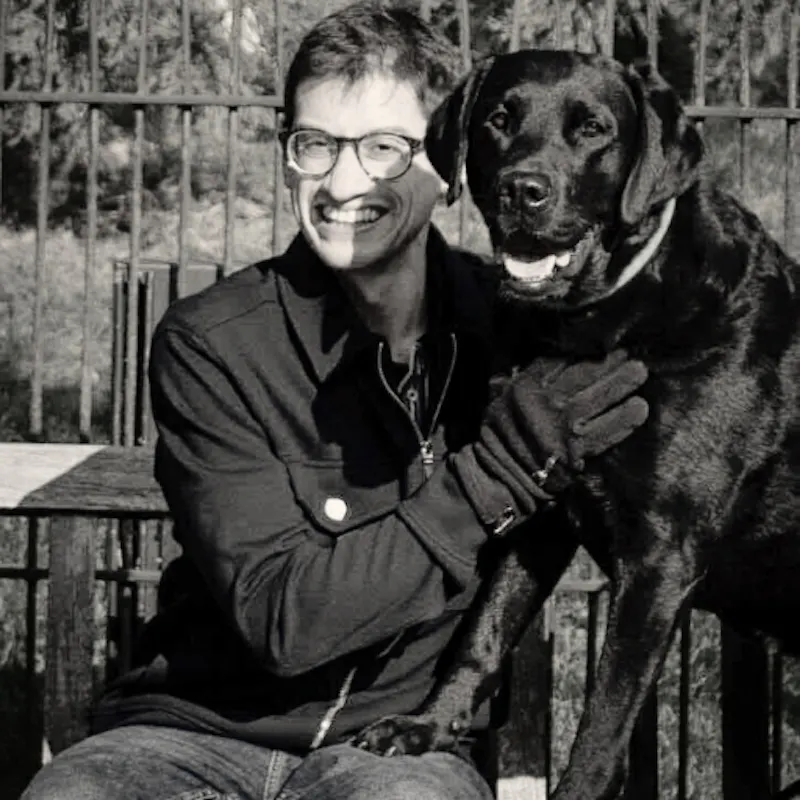

Six months ago, we shared Dr Lucas Denton’s story: a year of health improvement that started with a single blood test. But health journeys don’t have a neat beginning, middle, and end. Even after reaching your goal, you transition into maintenance mode.
Learning, adjusting, and pushing forward are part of an ongoing process.
Now, we’re handing it over to Lucas to share an update on his progress six months on.
If you missed Part 1, catch up on Lucas's story.
Have my healthy habits held up?
A lot of time has passed since the first blood test in July 2024 that set my health journey in motion. The real question now isn’t what’s changed since my last article, but what’s lasted. Have my habits held up, or have old patterns quietly crept back in?
From both my clinical experience and training in obesity medicine, I know how hard long-term change can be. Weight loss in particular is vulnerable to ‘yo-yoing,’ which describes where periods of loss are followed by regain.
Research suggests that more than 80% of people regain a significant proportion of lost weight within five years. Knowing that statistic has been sobering, but also motivating.
As the year draws to a close, I’ve taken time to reflect on the past six months. Rather than chasing new goals, I’ve focused on maintaining and strengthening the foundations I’ve built.
Tracking gives me gentle guardrails
One habit that has firmly stuck is tracking. I keep an eye on my daily steps, weight, and key blood markers.
This is about awareness, not perfection. Tracking acts as a gentle guardrail, giving me early signals that let me adjust before small changes become bigger problems.
Daily steps have become something of a game. I set myself a 10,000-step target and, at the time of writing, I’ve maintained a streak of over 250 days.
It’s an entirely arbitrary number, but it works for me. Having a dog helps, and longer morning walks are now simply part of my routine. On many days, I’ve logged close to 7,000 steps before work even begins.
I also started Couch to 5K and now run three times a week, usually about 5 kilometres each time. What surprised me most is that I genuinely enjoy it. Running has gone from something I ‘should’ do to something I want to do, which makes it far easier to sustain.
Eating healthy doesn’t mean overthinking it
Early on, calorie counting played a major role in my journey. After doing it consistently for over a year, I’ve been able to step back from it without losing control.
My tastes have genuinely changed. I now prefer simple, whole foods. I no longer crave the ultra-processed snacks that once felt irresistible.
Greek salads, fruit, nuts, legumes, fish, and vegetables are now my default choices. That shift feels significant. It suggests these habits are becoming embedded, rather than enforced.
My blood biomarkers have continued to improve
Regular blood testing has helped me see how these behaviours translate internally.
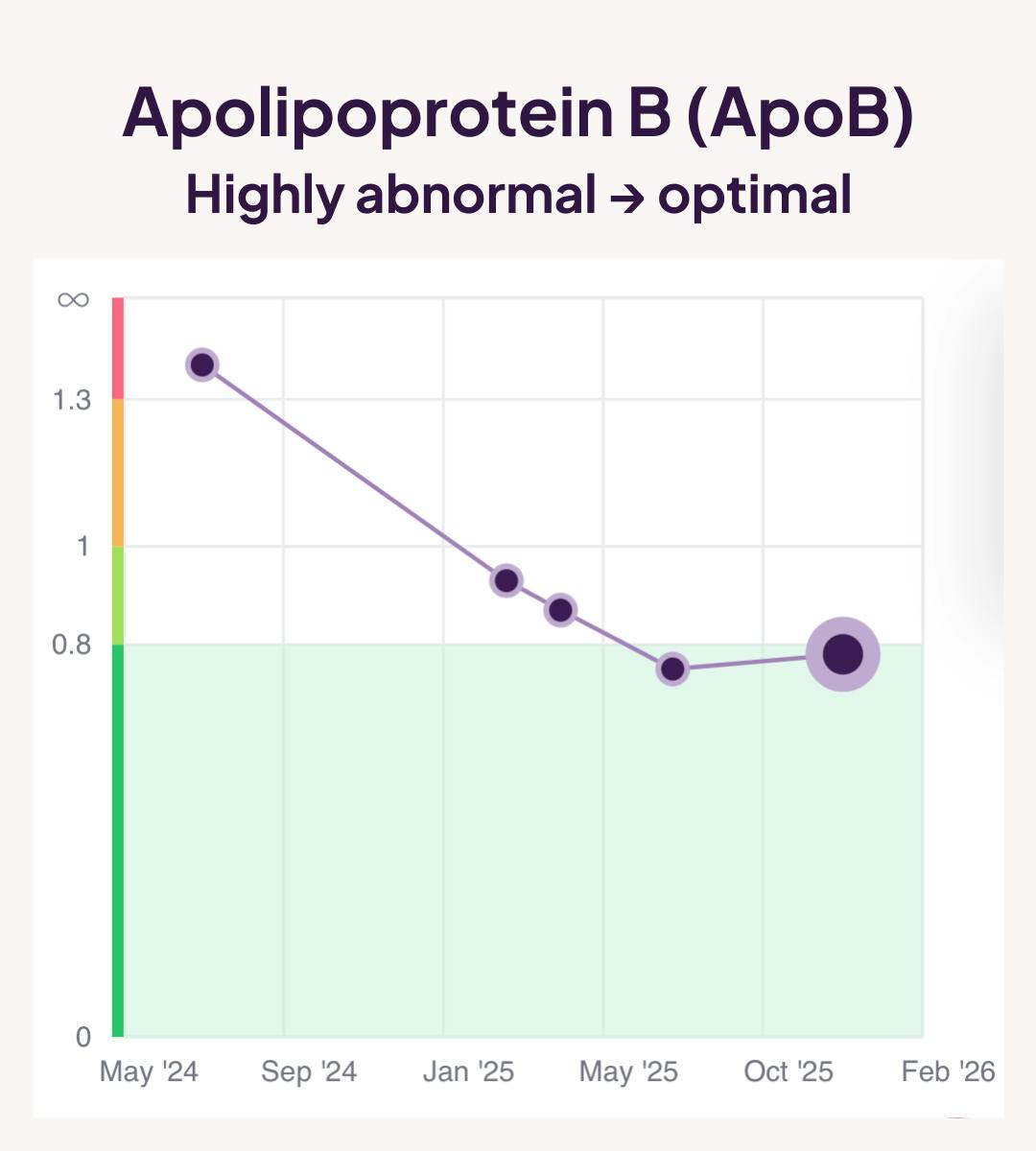
My ApoB has remained in the optimal range. Apob measures how many LDL and other atherogenic particles are in your blood, and it’s considered a more accurate predictor of heart disease risk than LDL.
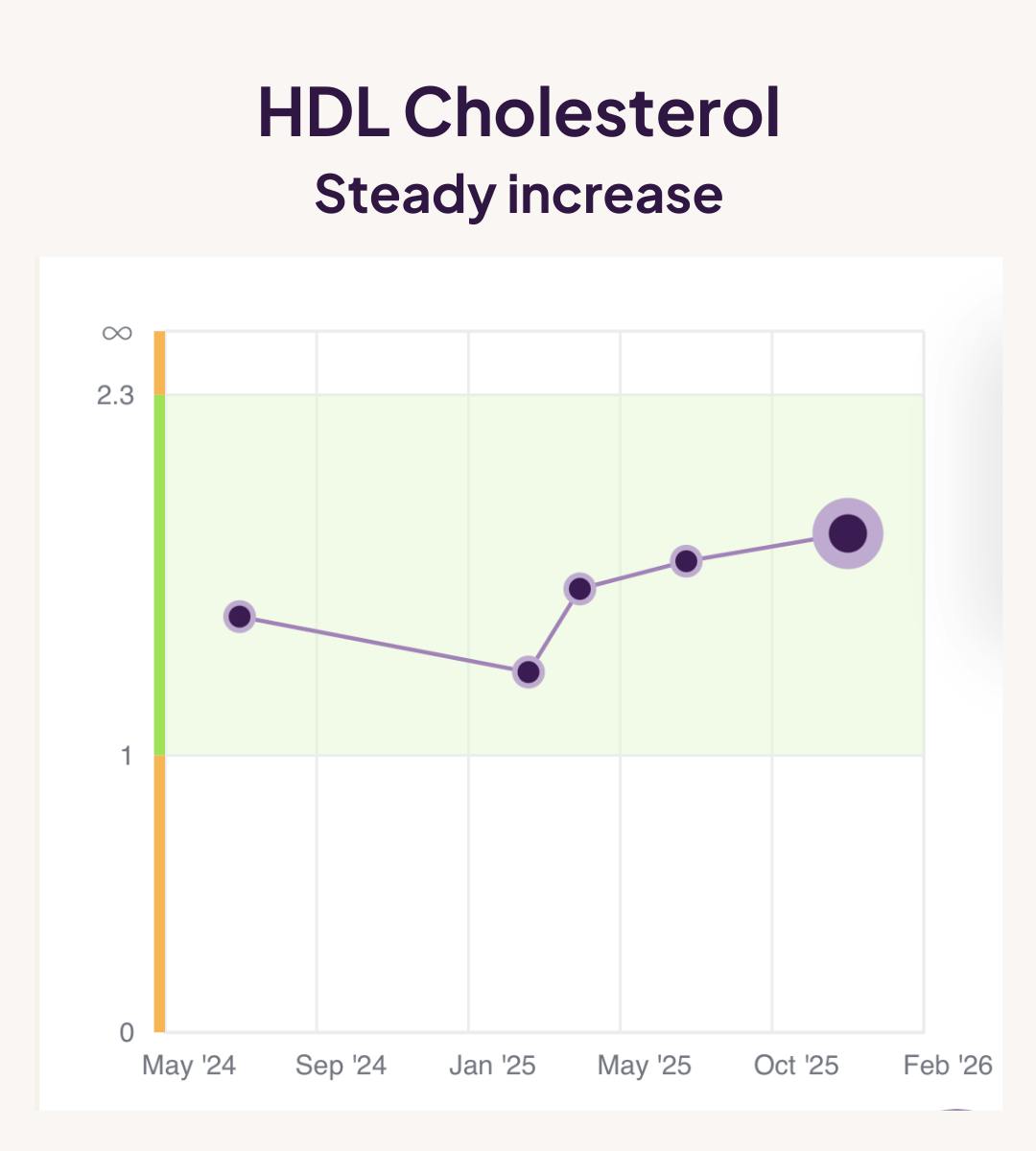
My HDL has continued to rise. HDL is often called ‘good’ cholesterol and helps protect against heart disease.
One of the biggest changes over the past six months has been my activity level, particularly running, and HDL is known to increase in response to regular aerobic exercise.
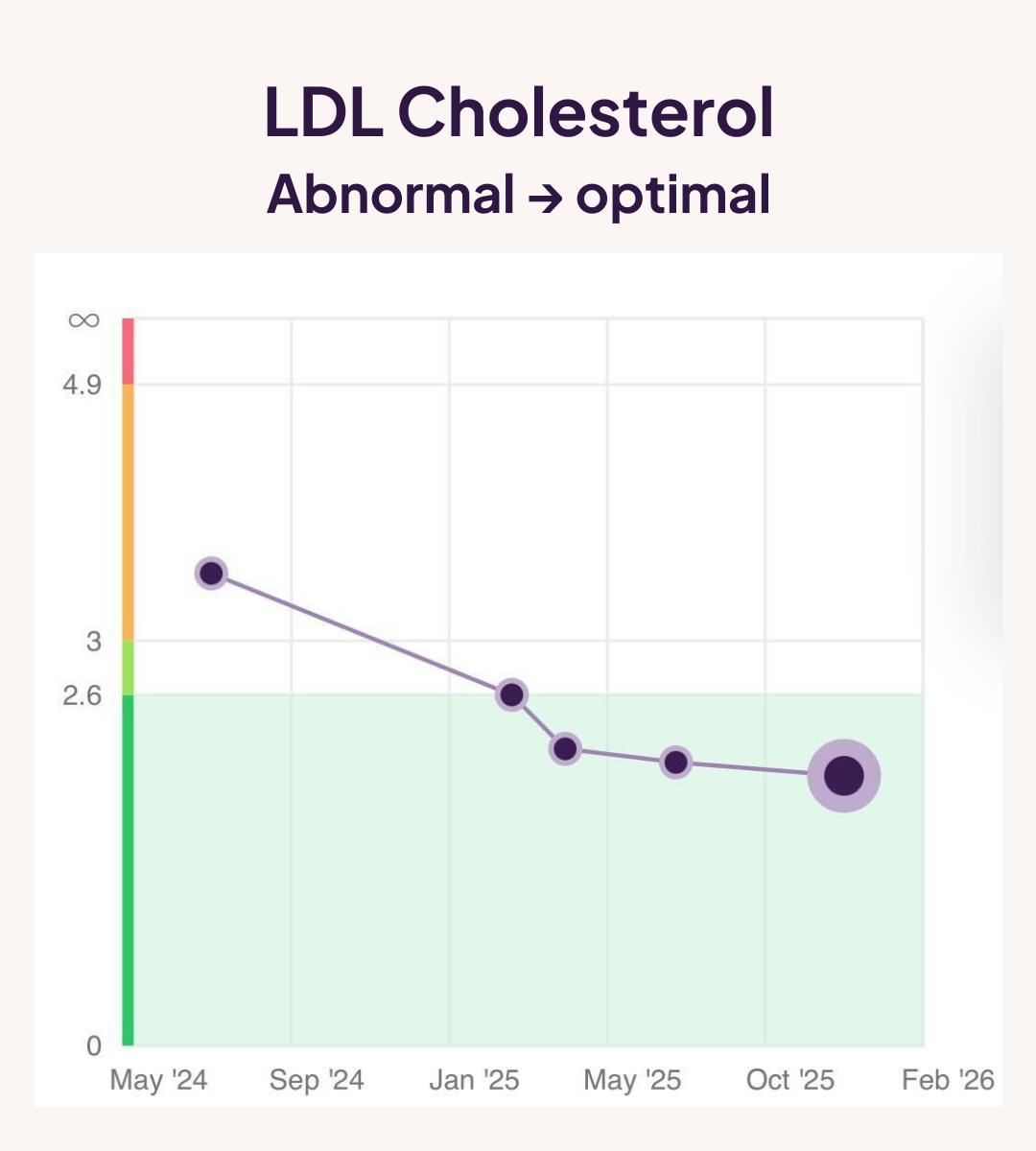
My LDL cholesterol has stayed in the optimal range. LDL is a measure of how much cholesterol is carried by LDL particles in the blood, and higher amounts are linked to an increased risk of cardiovascular disease.
My triglyceride-to-HDL ratio, another biomarker linked to heart disease risk, has also continued to improve.
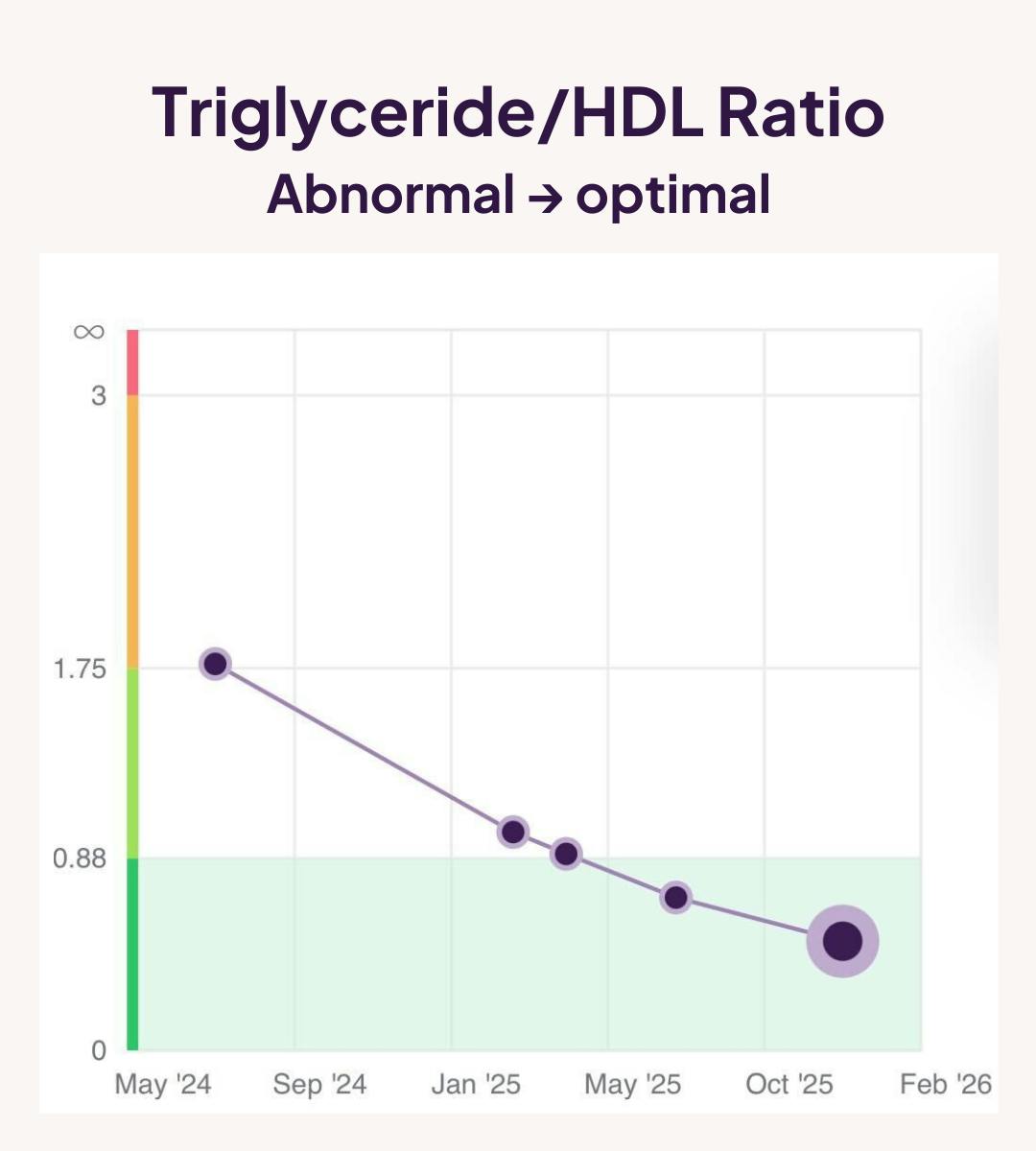
Exercise improves how the body processes fats, which likely explains the improvement. That pattern usually reflects healthier body composition, particularly a reduction in visceral (internal) fat, alongside improved fitness and consistent dietary habits.
While diet remains important, my nutrition has been stable for over a year now, making increased movement the most significant new variable.
My testosterone levels provided a useful curveball
Despite improvements across most markers, my testosterone level moved from normal into a low range. Given the amount of discussion and hype around testosterone online, this was initially surprising.
After repeated testing and discussion with another clinician, the most likely explanation was a mismatch between my energy intake and my training load.
There’s a recognised concept in sport and exercise medicine called relative energy deficiency in sport (RED-S). Put simply, it occurs when the body isn’t getting enough energy to support both day-to-day function and increased physical training.
This was a helpful reminder that more exercise isn’t always better if it’s not adequately fuelled. Since then, I’ve consciously increased my energy intake to better match my running, aiming for balance rather than restriction.
Looking forward
I’m realistic enough to know I’m not immune to the statistics around weight regain. But I’m hopeful that the combination of sustainable habits and ongoing tracking will help keep me on course.
Eating well and moving regularly now feel largely automatic, rather than something I have to constantly negotiate.
For me, that’s been the biggest change of all. Health no longer feels like a short-term project, but a set of routines that quietly support me in the background. And that, more than any single result, feels like real progress.
Learn more about Lucas’s journey by reading Part 1.
Disclosure
I’m a GP, registered with the GMC, with a special interest in lifestyle medicine and a SCOPE certification. I work with Thriva’s clinical team, have equity in the company, and get my at-home blood tests for free as part of my role. I also still work part-time in the NHS.
This article is based on my own experience—it’s not medical advice. I’ve mentioned tools and tests that helped me personally, but they won’t be right for everyone. If you’re experiencing symptoms or have concerns about your health, please speak to a healthcare professional who can offer support tailored to your situation.
- Ference, B. et al. (2017). Low-density lipoproteins cause atherosclerotic cardiovascular disease. 1. Evidence from genetic, epidemiologic, and clinical studies. A consensus statement from the European Atherosclerosis Society Consensus Panel. https://academic.oup.com/eurheartj/article/38/32/2459/3745109
- Hall, K. & Kahan, S. (2019). Maintenance of lost weight and long-term management of obesity. https://pmc.ncbi.nlm.nih.gov/articles/PMC5764193/
- Statuta, S., Asif, I. & Drezner, J. (2017). Relative energy deficiency in sport (RED-S). https://bjsm.bmj.com/content/51/21/1570
- Wood, G. et al. (2021). Determining the effect size of aerobic exercise training on the standard lipid profile in sedentary adults with three or more metabolic syndrome factors: a systematic review and meta-analysis of randomised controlled trials. https://pubmed.ncbi.nlm.nih.gov/34193471/