Why needles make some people faint, and what actually helps
What's covered?



Needle phobia is the 8th most common phobia among Britons. It activates your sympathetic and parasympathetic nervous system, leading to a drop in blood pressure and fainting — but coping strategies and Autodraw blood test methods can help.
Has a fear or phobia ever stopped you from doing something you’ve wanted to do, like visiting distant friends or family because of a fear of flying?
Phobias are really common, and they can affect how we live our lives. When it comes to health, they can have a hefty toll.
Many people put off having blood tests or even vaccinations due to a fear of needles. And when some try to go ahead with one of these procedures, it can lead to fainting.
There’s a big difference between not liking something and having a phobia. Someone might really dislike having a fly buzzing around their kitchen and go to great lengths to get rid of it. But when it comes to having a spider on their wall (that could helpfully catch the fly), they might feel paralysed if they have arachnophobia (a phobia of spiders).
Phobias, where your body’s response seems disproportionate to what’s happening, may feel embarrassing, especially when there’s a health impact. And it might make it harder for you to deal with them. But they’re a common issue for many people and nothing to be ashamed of.
In this article, we’ll take a look at just how common needle phobia is and what’s happening inside your body when it takes hold. Then, we’ll see what kinds of solutions might be available to help.
How common is needle phobia?
Trypanophobia — the fear of medical procedures involving needles or injections — is a particularly common one in Britain. A YouGov poll in 2023 found that 6% of Britons had a phobia of needles, with an additional 12% describing themselves as either being very or somewhat scared of them.
These percentages meant that needle phobia ranked 8th out of the phobias that the surveyors polled for.
Here’s how these top 10 phobias ranked:
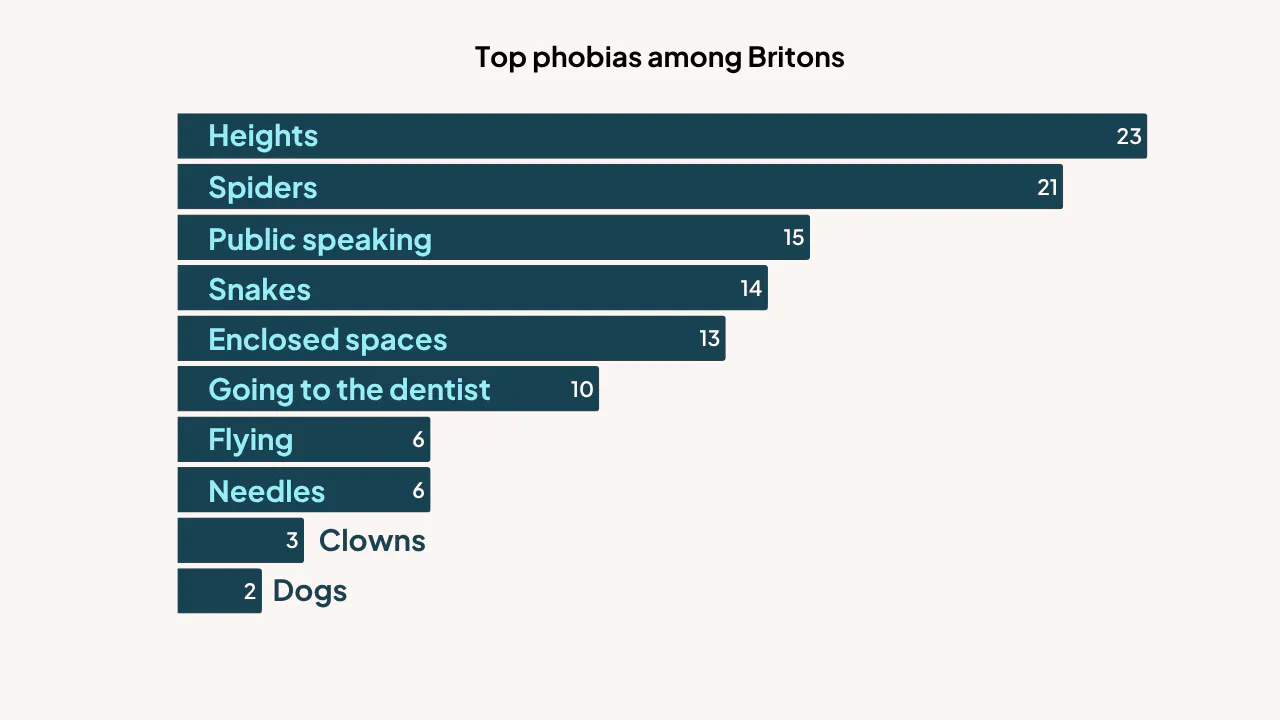
*Flying ranks above needles as more people described themselves as being very or somewhat scared of it.
This could represent over 4 million people across the whole UK if the survey is representative. That’s a lot of people who might be struggling with blood tests and vaccinations.
What happens in your body when you have needle phobia?
Needle phobia falls under the wider umbrella of “blood-injection-injury phobia,” and it affects your body in a different way to other phobias.
Most phobias trigger an anxiety response that involves activation of the sympathetic nervous system. It’s these nerves and related neurotransmitters that are behind your body’s “fight-or-flight” response.
Blood-injection-injury phobia activates your sympathetic nervous system, but it also activates your parasympathetic nervous system at the same time. This system regulates your “rest-and-digest” response, which typically relaxes your body.
This response can result in your blood pressure and heart rate dropping suddenly — known as a vasovagal response — causing you to faint.
Why does this happen?
There are some theories as to why these phobia responses differ. The fight-or-flight response happens to prepare your body to either escape or defend yourself against what it perceives to be an imminent threat.
When it comes to blood-injection-injury phobia, some experts suggest that the drop in blood pressure and heart rate is the body’s way of trying to survive an injury. While we know that a small needle doesn’t cause a true injury, the body could perceive it as a threat.
So, why does this response make some people faint? Lowering blood pressure and heart rate would make it easier for blood to clot, and fainting would make it easier for blood to travel to the brain (as you’d no longer be standing vertically).
How to get over a fear of needles
Overcoming a phobia can be difficult, often requiring a lot of work and support from a psychologist. You need to retrain your nervous system to realise that the source of the fear isn’t a threat, and the way your anxiety response is hard-wired means it’s not as simple as just trying to relax.
People who are scared of spiders know full well that a little critter the size of a coin can’t do them any harm. But that doesn’t stop their nervous system from leaping into overdrive whenever one scuttles across the floor.
Needle phobias activate two different parts of your nervous system, so there are two different responses to overcome.
Applied tension and breathing exercises
If fainting is an issue, a technique called applied tension could help. This helps to increase your blood pressure back to normal levels and promotes blood flow to your brain.
Here’s how to do it:
- Make sure you are sitting down in a comfortable position.
- Tense the muscles in your arms, legs, and upper body.
- Hold this tension for around 10 to 15 seconds (or until your face starts to feel warm).
- Release the tension and return to your original position.
- Rest for 20 to 30 seconds.
- Tense your muscles again as before.
- Repeat these steps until you have tensed up 5 times.
When it comes to the fight-or-flight response that can also occur, breathing exercises may be useful.
Creating a ‘fear ladder’
Another strategy that has been useful for people overcoming their phobia is creating a fear ladder. This involves putting together a list of things relating to your fear of needles and ranking them in order of how difficult or distressing they feel.
Here’s an example ladder, from least distressing to most distressing:
- Reading about blood donation procedures
- Speaking with healthcare about having an injection
- Looking at pictures of people donating blood
- Watching a video of someone having an injection
- Holding a needle
- Providing a single blood sample
- Donating blood
The idea is to slowly work your way up the ladder, exposing yourself to each rung one by one. Applied tension and breathing exercises can support this gradual journey. It might take more than one go to work through each rung, and that’s okay.
You may find it useful to give a score to each rung of the ladder, such as a rating out of 10 to show how distressing you find each thing. Over time, re-scoring the rungs can provide an indication of the progress you’ve made.
Talking to people, especially staff
It’s really useful to let people know if you have a needle phobia, especially when it comes to friends, family, and clinical staff.
Phobias are nothing to be ashamed or embarrassed by, and a common reality for so many people.
When people know that you have a phobia, they’ll be able to provide support. This could take the form of extra information, a friendly presence, or a distraction when the time comes to face your fear.
Overcoming the barrier to blood testing
A needle phobia can keep people away from blood testing and a deeper understanding of their health.
Hannah, a Thriva user, said that she previously would have paid double to avoid having a blood test.
“There is something really, really stressful about the blood testing process in the UK and the sensory aspect of phlebotomy, and how overwhelming it is both physically and from a sensory perspective for neurodivergent people,” she explained.
One thing that clinicians and health companies can do to help people with phobias is to make the testing process easier.
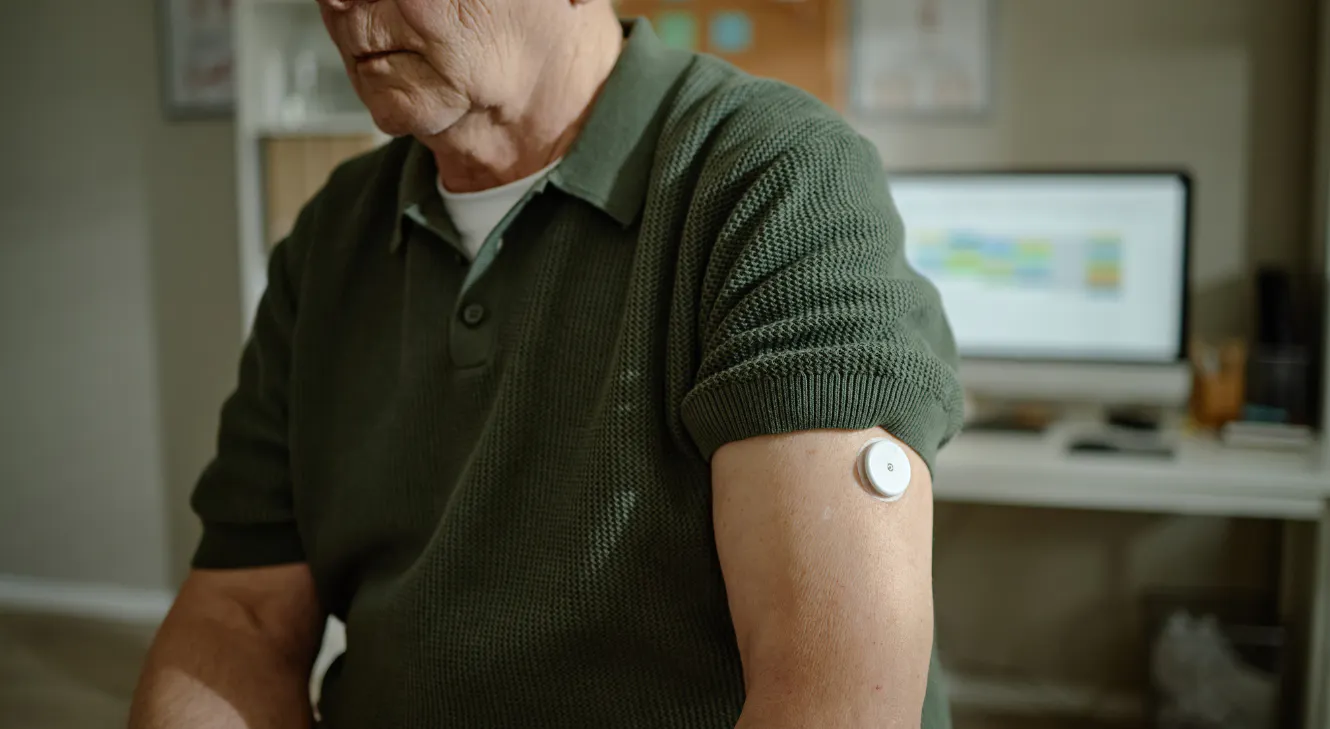
To this end, the development of Autodraw devices has been a step forward. These aim to make it easier and less intimidating to collect blood samples. The device attaches to the upper arm, and using a small needle, it draws a small blood sample that can give valuable insight into your health.
Thriva uses Autodraw for its blood testing, and 91% of users say that these devices are pain-free.*
You can learn more about Autodraw devices here. Note: This page contains some images and videos of the device in action further down.
It’s also important to note that Autodraw isn’t suitable for everyone, and we only provide it for individuals 18+.
*Based on a 2025 survey of 1,067 Thriva users.
Takeaway
A fear of needles doesn’t need to be a permanent barrier preventing you from gaining deeper insight into your body and health. It’s a common issue for many people, but there are steps you can take to gradually work through it. With time and effort, your nervous system can adjust, and you can find yourself taking new steps on your health journey.
Disclaimer: This information is for general educational purposes only and isn’t a substitute for professional medical advice, diagnosis, or treatment. Always discuss new supplements with a qualified healthcare professional if you take regular medications or have medical problems, or have questions about your health. If you’re having a medical emergency, please seek help by contacting your local emergency services.
- Ayala, E. et al. Treatments for blood-injury-injection phobia: A critical review of current evidence. (2009). https://www.sciencedirect.com/science/article/abs/pii/S0022395609000880
- McCorry, L. Physiology of the autonomic nervous system. (2007). https://pmc.ncbi.nlm.nih.gov/articles/PMC1959222/
- McLenon, J., and Rogers, M. The fear of needles: A systematic review and meta-analysis. (2019). https://pubmed.ncbi.nlm.nih.gov/30109720/
- NHS. Overview: Needle phobia and overcoming your fear. (2024). https://www.guysandstthomas.nhs.uk/health-information/needle-phobia-and-overcoming-your-fear
- Pitkin, M., & Malouff, J. Self-arranged exposure for overcoming blood-injection-injury Phobia: a case study. (2014). https://pmc.ncbi.nlm.nih.gov/articles/PMC4346072/
- Raven, P. What do Britons say they have a phobia of? (2023). https://yougov.com/en-gb/articles/45297-what-do-britons-say-they-have-phobia
- Sánchez-Navarro, J. et al. Autonomic reactivity in blood-injection-injury and snake phobia. (2018). https://pubmed.ncbi.nlm.nih.gov/30470310/